

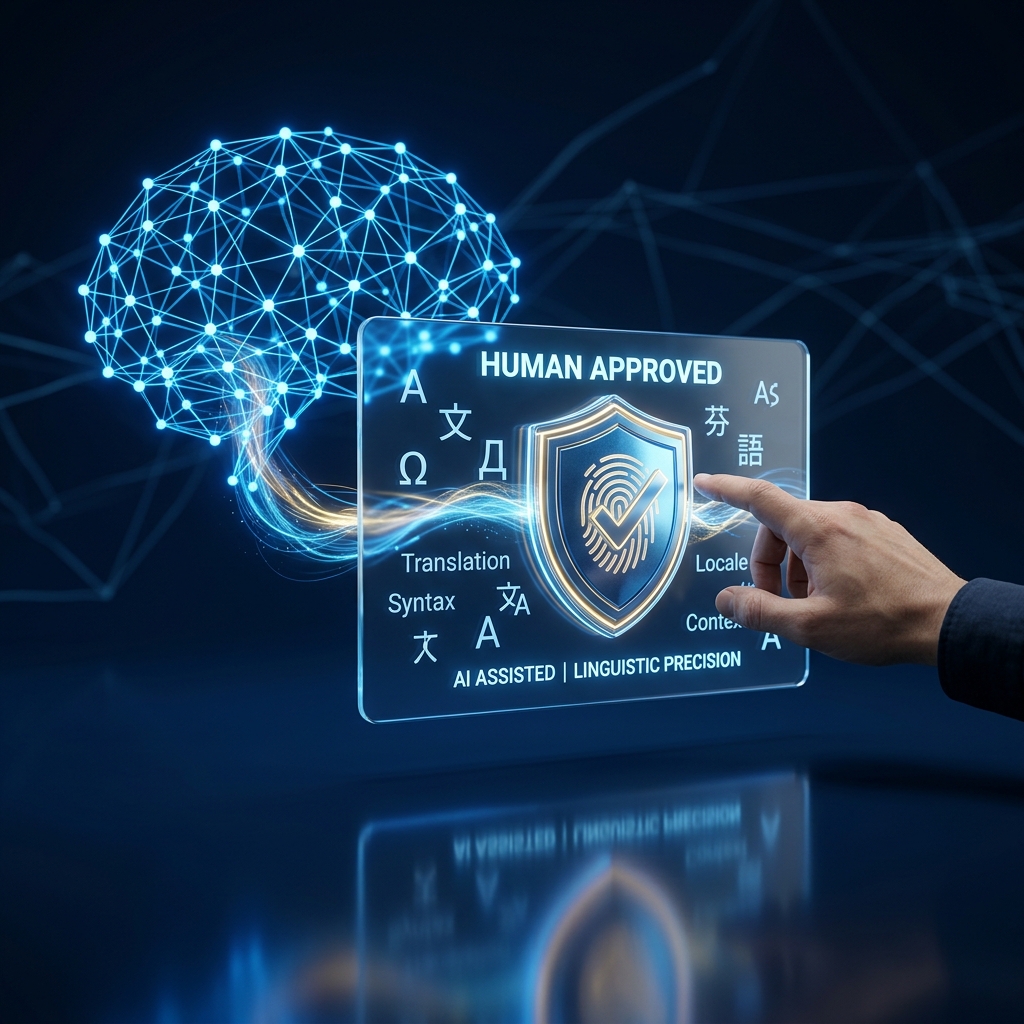
Will Artificial Intelligence Replace Translators?
In recent years, the evolution of artificial intelligence language models has sparked an intense debate: are we witnessing the end of professional human translation?
Between enthusiastic announcements about instant translations and fears of an overall drop in quality, the operational reality for companies competing in international markets is far more complex and nuanced.
The short answer is no: AI will not replace professional linguists. However, it has already permanently changed the way we work, laying the foundation for a new collaborative model between technology and human expertise.
Where AI Still Shows Significant Limitations (and Why Errors Cost Dearly)
In B2B communications, as well as legal, financial, and technical fields, precision is not optional—it is a core compliance and corporate security requirement. Generative artificial intelligence and advanced machine translation systems still present critical structural limitations:
- Legal standing and procedural accountability: An algorithm does not sign a contract, assume liability for an inaccuracy in a financial statement, nor guarantee the legal validity of a corporate document.
- Cultural adaptation and market nuances: AI translates words and statistical patterns, but struggles to capture corporate Tone of Voice and localized distinctions (e.g., commercial terminology used in American vs. British English, or the nuances of the DACH market).
- Confidentiality and data security (Data Privacy): Inputting confidential documents, M&A reports, or industrial patents into public machine translation engines exposes companies to data breach risks and non-compliance with GDPR.
How AI Is Transforming Translation for the Better
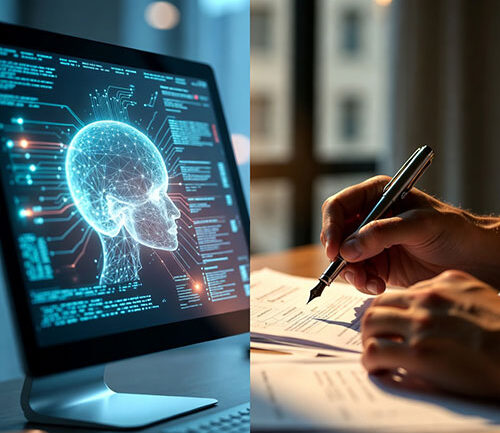
Excluding AI from corporate workflows would be a strategic mistake equal to handing over the entire workload without human supervision. When guided by expert linguists, technology becomes an extraordinary accelerator:
- High-speed drafting and pre-editing: Machine Translation models allow for a significant reduction in initial processing times for high-volume texts.
- Translation memory and glossary integration: AI works in synergy with client terminology databases, ensuring global consistency.
- Human focus on value-add: By delegating repetitive components to algorithms, human translators/post-editors can focus their attention on stylistic refinement, conceptual accuracy, and contextual verification.
Organizations that adopt integrated Machine Translation Post-Editing (MTPE) workflows experience an average productivity boost of +40%, providing companies with reduced turnaround times without compromising quality standards.
Polyline’s Approach: Technology Guided by Human Expertise
At Polyline, we do not view artificial intelligence as a threat, nor as a shortcut to compromise quality. To us, it represents a technological infrastructure to be managed with rigor.
The real question for global businesses is not whether to use AI, but how to integrate it securely, accurately, and in compliance with corporate standards.
Looking to optimize your company’s translation workflows while ensuring maximum accuracy and data security?
Contact the Polyline team to discover how we tailor custom workflows for your technical and corporate documentation.

 © 2026 Polyline. All rights reserved.
